
Smart Controllers Let Brazil Solar Beat Limits

Smart controllers let Brazilian PV farms exceed export caps while staying grid‑compliant
Brazilian installer Alba Energia has shown that smart power controllers, paired with ANEEL’s simultaneity rule, can let a photovoltaic (PV) plant generate far more than the utility‑approved export limit without violating grid constraints. In two recent pilots, the company installed systems up to 48 kW while the authorized export was only 11 kW, demonstrating that on‑site consumption can be fully leveraged to work around reverse‑power‑flow restrictions.
Simultaneity rule removes the need for reverse‑flow analysis when technical conditions are met
In 2024 ANEEL introduced Resolution 1098/2024, which exempts projects from the costly reverse‑power‑flow study if they satisfy the simultaneity criterion – the instantaneous demand of the consumer unit must be taken into account when setting the export ceiling. The rule uses the past 12 months of average consumption, meaning a customer must wait up to a year for a higher demand profile to be reflected in the utility’s calculations. This regulatory change opened the door for Alba Energia to propose larger PV plants that would otherwise be blocked by the 7.5 kW or 11 kW export caps.
Pilot 1 – 37 kW coffee farm runs a 23 kW inverter under a 7.5 kW export limit
At the Guisolphi family’s specialty‑coffee property in São Roque do Canaã, the utility allowed only 7.5 kW to be fed into the grid. Alba Energia installed a 37.2 kW array with a 23 kW inverter and a smart controller that throttles export to the authorized 7.5 kW. When the farm’s daytime load reaches 15.5 kW, the inverter can still run at 23 kW; the excess 7.5 kW is exported, while the remaining 15.5 kW powers processing equipment on‑site. The surplus is recorded as credit for up to 60 months, preserving savings even during night‑time consumption or periods of peak demand.
Pilot 2 – 48 kW irrigation farm runs three 10 kW inverters under an 11 kW export limit
Farmer Célio Marins Tatagiba needed to shift his irrigation from night to day. The utility’s daytime consumption profile allowed only 11 kW of export. Alba Energia responded with a 48.36 kW system built from 78 × 620 W modules and three 10 kW inverters, all coordinated by a single smart controller. The controller directs all generated power to water‑pump loads, so no electricity is exported despite the plant’s size. Because existing “Zero‑Grid” controllers could only manage one inverter, GoodWe supplied a software update that lets one controller monitor three parallel inverters – a feature previously available only for three‑phase grids.
Technical breakthrough: controlling multiple single‑phase inverters with one device
The split‑phase grid in Espírito Santo required a custom solution. GoodWe’s firmware upgrade allowed a single smart controller to read the output of three independent inverters and apply the export‑limit algorithm in real time. PHB validated the update in the lab before field deployment, ensuring the system respected the 11 kW cap while delivering the full 48 kW to the irrigation pumps.
Why smart controllers are set to become common across Brazil
As distribution feeders reach their hosting capacity, utilities increasingly reject new connections or impose tighter export caps. A recent IEEE study on reverse‑power‑flow mitigation highlights that real‑time monitoring and adaptive control are among the most effective ways to balance technical reliability with economic efficiency. Alba Energia’s experience shows that smart controllers can keep export exactly at the authorized level while using every extra kilowatt for on‑site demand, a model that regulators and utilities could endorse.
What it means for Israel – a parallel opportunity
Israel faces similar reverse‑power‑flow concerns in densely populated feeder zones. Using the typical Israeli figures (residential tariff ≈ ₪0.48/kWh, install cost ≈ ₪3,150/kWp, central‑region yield ≈ 1,700 kWh/kWp yr⁻¹), a 10 kWp rooftop system would produce ≈ 17,000 kWh/yr, worth ≈ ₪8,160 annually. At a ₪31,500 upfront cost, the simple payback is ≈ 3.9 years. If a smart controller were added to respect a utility‑imposed export limit of, say, 5 kW, the homeowner could still harvest the remaining 5 kW for on‑site loads (air‑conditioning, EV charging) and avoid curtailment, effectively mirroring Brazil’s approach. This demonstrates that smart‑controller technology could unlock additional capacity on Israel’s constrained feeders without extra grid upgrades, helping progress toward the national 30 % renewable target for 2030.
For more on how to size a home solar system, visit our solar ROI calculator and explore the latest market data on our data page.
Sources & further reading
- Methodology for Quantifying and Managing the Reverse Power Flow...
- ANEEL publishes resolution on flow reversal in the Official Gazette
- Electricity Grids and Secure Energy Transitions - Microsoft.NET
- Unlocking the Grid - IADB Publications
- ANEEL publishes resolution on flow reversal in the Official Gazette
FAQ
What is Brazil’s simultaneity rule?
It lets a PV project skip the reverse‑power‑flow study if the instant on‑site demand is considered when setting the export ceiling, using the past 12 months of average consumption.
How do smart controllers avoid curtailment?
They continuously compare generation with real‑time load and automatically reduce inverter output only when the export would exceed the utility‑approved limit.
Can one controller manage several inverters?
Yes – GoodWe released a firmware update that lets a single controller monitor three parallel single‑phase inverters, a first for split‑phase grids.
Why is this relevant for Israel?
Israeli distribution feeders also face export caps; a smart controller could let homeowners keep the export at the allowed level while using extra power on‑site, improving ROI.
What payback can an Israeli homeowner expect?
A typical 10 kWp system costs about ₪31,500 and saves roughly ₪8,160 per year, giving a simple payback of around 3.9 years.
Share this post
More from Technology
6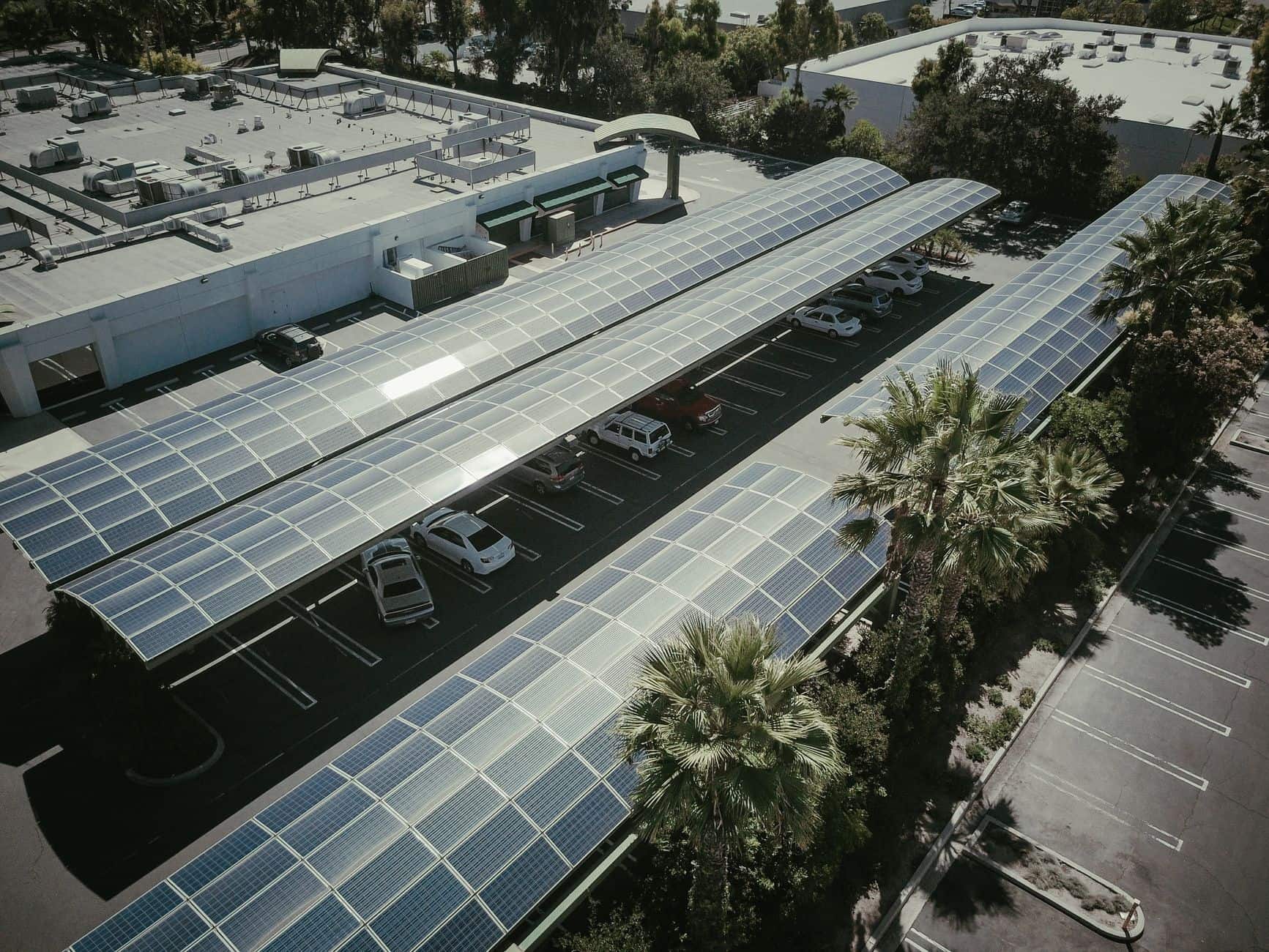
Solar Carports Grow 12% Yearly, Foundations Costly
Solar carports are set to grow 12% annually, but costly foundations and engineering risks can erode margins; early geotechnical work is the cheapest insurance.

Nigerian Youth Grant Fuels Solar Innovation
The APC National Youth Wing has earmarked ₦17.5 million to fund young Nigerian innovators developing solar, biogas and other clean‑energy projects.

Oman's New Polysilicon Plant Boosts Solar Supply
United Solar has completed a $1.6 billion financing round to build a 100,000‑tonne‑per‑year polysilicon plant in Oman, diversifying global supply and potentially lowering solar module prices for Israel.
Hoymiles Solar Inverter Fix Arrives Aug 30
Hoymiles will release a free AES‑encrypted firmware update on 30 August to fix an unauthenticated OTA vulnerability in its discontinued HM‑series micro‑inverters.
Daikin Nexio Max Heat Pump Slashes Energy Use
Daikin’s Nexio Max rooftop heat pump, available in 7.5‑10 ton sizes, achieves up to 3.85 COP and can operate down to –25 °C, offering Israeli commercial buildings a low‑carbon heating option when combined with solar PV.

Geothermal Hydrogen Hits $1.75/kg in Iceland
Syntholene’s Icelandic pilot shows geothermal‑integrated SOEC can produce hydrogen at $1.75‑$2.10 /kg, about one‑third the cost of European green hydrogen.