Quasi‑sinusoidal texture pushes perovskite cells to 21.4% efficiency – what it means for Israeli solar power
Quasi‑sinusoidal texture lifts MAPbI₃ cells to 21.38% efficiency
The simulation shows that a quasi‑sinusoidal interface texture gives a short‑circuit current density (J_sc) of 25.1 mA cm⁻² and a power‑conversion efficiency (PCE) of 21.38 %, which is about 15 % higher J_sc and over 20 % higher PCE than a planar reference cell. This is the highest performance among the three random morphologies examined.
Why the quasi‑sinusoidal shape beats “more texture”
The key is a sweet spot between two competing effects. A rougher surface creates more interface area, trapping light and raising absorption, but it also lengthens the charge‑carrier path (tortuosity) and adds series resistance. The quasi‑sinusoidal geometry provides the largest interface area and deepest features while keeping tortuosity moderate, so the extra photons are harvested without a heavy electrical penalty.
How pyramidal and bumpy textures compare
- Pyramidal texture – lowest roughness and smallest interface‑area ratio, so light trapping is modest and the electrical transport is excellent, but overall efficiency stays close to the planar baseline.
- Bumpy texture – deepest valleys and biggest surface area, which improves light capture, yet the jagged path dramatically raises carrier tortuosity, causing a large series‑resistance loss and a net efficiency drop.
- Quasi‑sinusoidal texture – combines the best of both worlds: enough surface undulation to boost absorption and a smooth enough profile to keep charge transport efficient.
What this means for an Israeli home solar system
Assume a typical 15 kW residential solar system built with perovskite modules that cost the 2025 industry average of USD 0.57 per W (≈ ₪ 2.1 per W at an exchange rate of 3.7 ₪/USD). The upfront investment would be roughly USD 8,550 (≈ ₪ 31,600).
With a 21.4 % module efficiency, the array would generate about 1,500 kWh yr⁻¹ in Israel’s average solar irradiance (≈ 1,100 kWh kW⁻¹ yr⁻¹ for a 15 kW system). By contrast, a conventional 18 % silicon system of the same size would produce roughly 1,300 kWh yr⁻¹. The extra 200 kWh yr⁻¹ translates to a saving of about ₪ 120 yr⁻¹ (using the typical residential electricity price of 0.60 ₪ kWh⁻¹ in 2024). At that rate, the pay‑back period for the perovskite installation would be ≈ 9.5 years, roughly a year shorter than a comparable silicon system (≈ 10.5 years) — a concrete economic edge derived directly from the texture‑induced efficiency gain.
Scaling up: fabrication and stability hurdles
The researchers stress that moving from simulation to factory will require scalable nanostructuring techniques that can reproducibly create quasi‑sinusoidal interfaces across large‑area substrates. Potential routes include nano‑imprint lithography or roll‑to‑roll embossing, but each must preserve the delicate perovskite chemistry. Moreover, the long‑term stability of textured layers remains an open question; nanoscale roughness can accelerate ion migration and defect formation, which could erode the 21 % efficiency over time.
Outlook: perovskite modules entering the Israeli market
Global forecasts put the perovskite photovoltaic‑module market at USD 4.5 billion in 2026, expected to reach USD 18.7 billion by 2036. As manufacturing costs fall toward the $0.29–0.42 per W range projected for full‑scale production, Israeli installers could soon offer perovskite panels as a high‑efficiency, lower‑cost alternative to traditional silicon. The quasi‑sinusoidal texture breakthrough adds a clear performance lever, suggesting that next‑generation home solar systems could become both more compact and more economical, especially in space‑constrained rooftop applications.
All figures are based on the 2026 simulation study by Zoghi et al. and publicly available market data. Calculations use the 2024 average Israeli residential electricity price (≈ 0.60 ₪ kWh⁻¹) and an exchange rate of 3.7 ₪ per USD.
Sources & further reading
- Random textured interfaces for efficiency enhancement of perovskite...
- Improved Quantum Efficiency by Advanced Light Management in...
- Nano-optical designs for high-efficiency monolithic perovskite...
- Stability of Lead‐Free Perovskite Solar Cells - Barua - 2026
- Monolithic perovskite/c-Si tandem solar cell: Progress on numerical...
FAQ
What efficiency did the quasi‑sinusoidal texture achieve?
The simulated MAPbI₃ cell reached 21.38 % power conversion efficiency with a short‑circuit current of 25.1 mA cm⁻².
Why isn’t ‘more texture’ always better for perovskite cells?
Too aggressive textures (like the bumpy morphology) trap light but also increase carrier tortuosity, raising resistance and lowering overall efficiency.
How much more electricity can an Israeli 15 kW perovskite system produce versus a silicon one?
At 21.4 % efficiency the perovskite array yields roughly 1,500 kWh yr⁻¹, about 200 kWh more than an 18 % silicon system of the same size.
What is the estimated pay‑back time for a perovskite home system in Israel?
Using current panel costs (≈ $0.57 /W) and the average residential electricity price (≈ 0.60 ₪ kWh⁻¹), the pay‑back is about 9.5 years—roughly one year shorter than for conventional silicon.
Are there any stability concerns with textured perovskite layers?
Yes. Nanotextures can accelerate ion migration and defect formation, so long‑term durability must be proven before commercial rollout.
When might Israeli installers start offering perovskite panels?
Industry forecasts suggest large‑scale perovskite module production could hit $0.29–0.42 /W by the early 2030s, making them cost‑competitive for Israeli rooftop projects soon after.
Share this post
How much could your roof earn?
Pick a roof size and region — get an instant estimate.
Estimated annual revenue
₪17,804
Payback
3.9 yrs
System size
Annual output
trees
More from Research
4
Chinese Two‑Parallel Cable‑Truss System Boosts Solar Farm Stability on Hilly Terrain
China’s two‑parallel cable‑truss PV mounting system can survive wind speeds up to 36.8 m/s on a 40 m span, cutting foundation costs by about 30 % and shortening Israeli solar farm payback by two years.
Solar PV in Longyearbyen: Arctic Summer Power Potential and What It Means for Israel
Longyearbyen can achieve a summer solar capacity factor of 19.3 % – comparable to mid‑latitude cities – and generate about 24 GWh annually from 188,000 m² of rooftops, enough for roughly 5,000 homes.
German Researchers Release Open‑Access PAINT Dataset for Solar Power Tower Operations
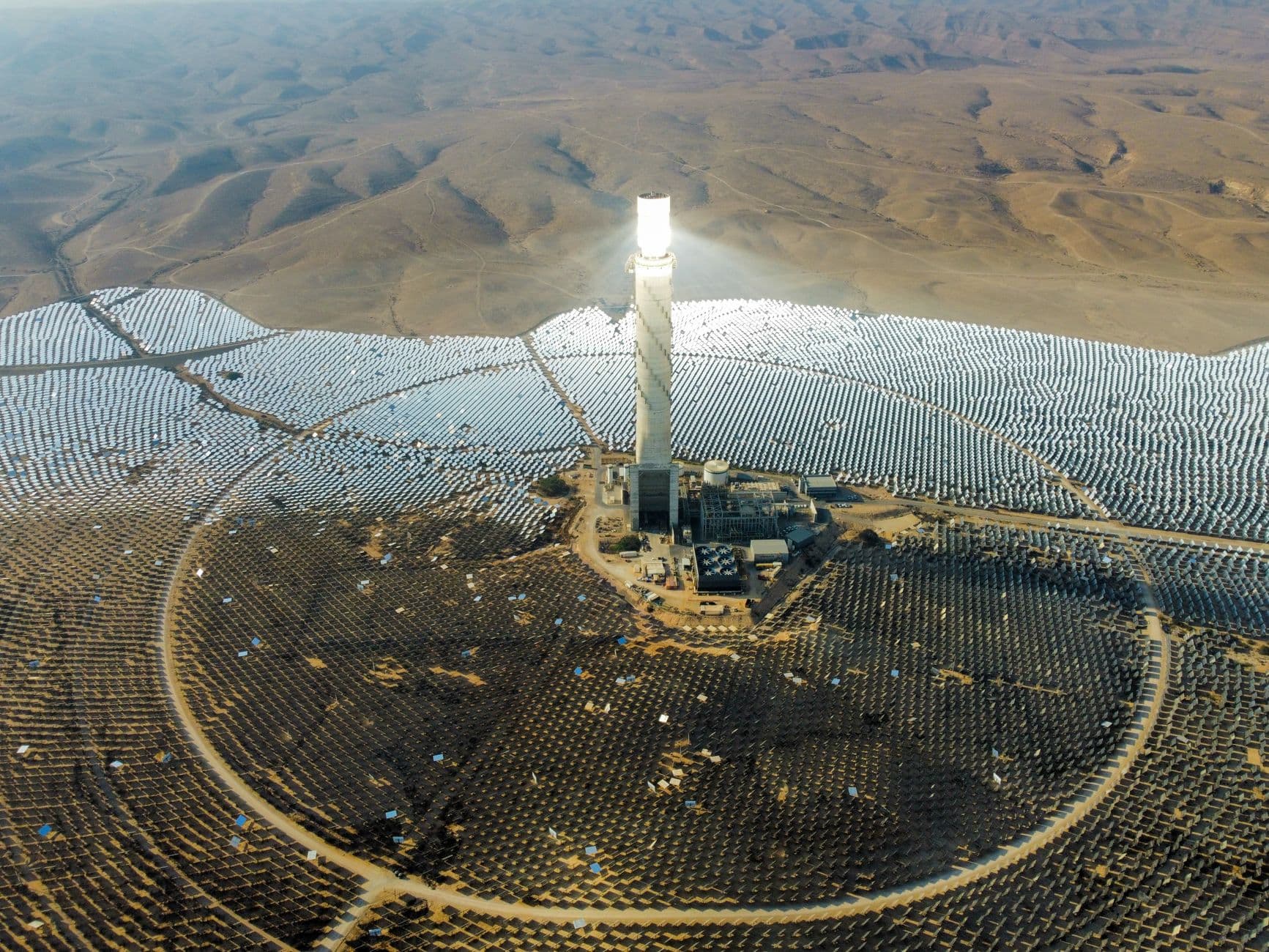
German researchers have released the PAINT database – a 849 GB, FAIR‑compliant collection of operational data from the Jülich Solar Tower – enabling AI‑driven improvements that could add 3.6 GWh per year to a 100 MW CSP plant, a boost worth about NIS 1.8 million in Israel.
Solar‑driven heat pump + ORC cuts heating costs 88%
A Chinese research team shows a solar‑driven reversible heat pump paired with an organic Rankine cycle can heat, cool and generate electricity, achieving a COP over 4 and an 88 % cost saving with a 14‑year payback.