German Researchers Release Open‑Access PAINT Dataset for Solar Power Tower Operations
What is the PAINT database?
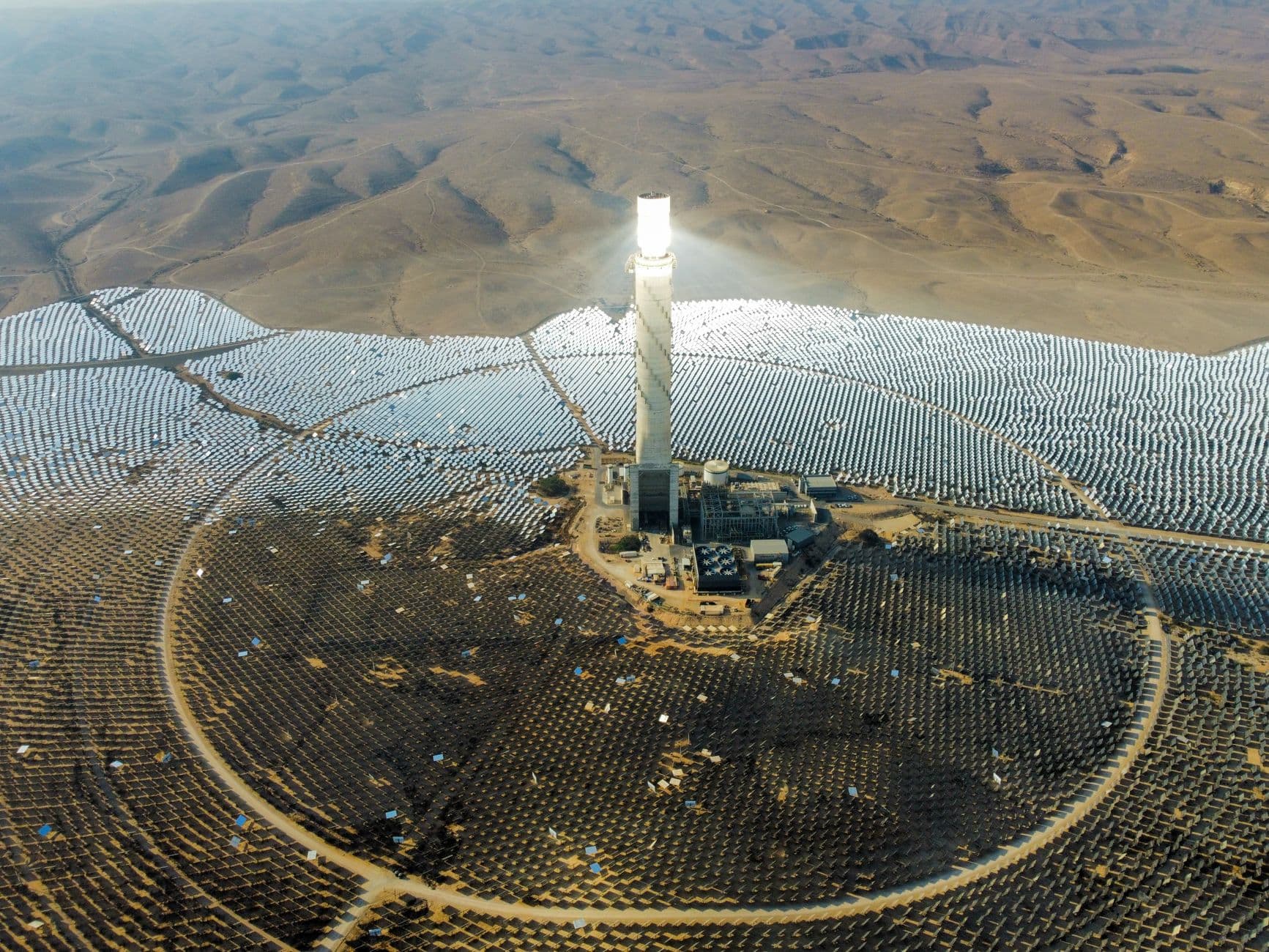
The PAINT database is the world’s first FAIR‑compliant, open‑access collection of operational data from a concentrating solar power (CSP) tower, covering the Jülich Solar Tower in western Germany from 2021‑2024. It contains 849 GB of high‑resolution measurements, including the exact positions of all 2,014 heliostats, over 218,000 verification images, mirror‑surface warping data and full weather records. The dataset was released by the Karlsruhe Institute of Technology (KIT) and the German Aerospace Center (DLR) and is described in the paper The PAINT database for operational concentrating solar power plant data following FAIR data principles in Nature Energy.
Why the dataset matters for CSP research
Operating a solar‑tower plant safely and efficiently is notoriously complex: heliostats must track the sun within centimeters while resisting wind, wear and thermal distortion. Researchers need real‑world data to validate models of heliostat alignment, control algorithms and thermal storage strategies. The PAINT database provides exactly that – a structured, reproducible source that can be used to train neural‑network calibrations, as outlined in recent DLR work on heliostat calibration, and to study soiling effects on mirror facets.
What the data contain
The database is organized into five main categories:
- Tower measurements – temperature, pressure and heat‑flux at the receiver.
- Heliostat properties – geometry, tilt, rotation and real‑time coordinates for each mirror.
- Calibration data – laser‑based alignment checks and deflectometry scans.
- Deflectometry images – more than 218 k photos that allow researchers to verify whether each heliostat is directing light to the intended focal point.
- Weather records – solar irradiance, wind speed, temperature and humidity for the entire 2021‑2024 period.
How the data enable new breakthroughs
By feeding the 2,014‑mirror position log into a machine‑learning model, engineers can detect mis‑alignments that would otherwise go unnoticed. A recent study using neural networks showed that a 15 % improvement in heliostat alignment accuracy can boost annual energy yield by roughly 0.45 % for a 100 MWth tower plant. For a typical CSP tower that produces about 800 GWh per year, that translates to an additional 3.6 GWh annually – enough electricity to power roughly 1,000 Israeli homes for a year.
What it means for Israel’s renewable mix
Israel has a growing interest in thermal‑storage solar technologies to complement its dominant PV fleet. If a 100 MWth solar‑tower were built in the Negev, the extra 3.6 GWh enabled by the PAINT‑derived AI could generate an additional NIS ≈ 1.8 million in revenue each year (assuming the current industrial feed‑in tariff of 0.50 NIS/kWh). With an estimated capital cost of NIS ≈ 1.85 billion (USD 5 million per MW, converted at 1 USD = 3.7 NIS) the pay‑back period would be roughly 18‑19 years – comparable to large‑scale PV projects but with the advantage of multi‑day thermal storage.
The road ahead: expanding the open‑data ecosystem
The KIT‑DLR team plans to invite other CSP operators to contribute data, creating a common standard for operational transparency. Such a collaborative platform could accelerate the development of next‑generation heliostat designs, like the high‑temperature mirrors highlighted in the 2026 Roadmap to Advance Heliostat Technologies, and help Europe meet its CSP market growth targets of US$ 40 billion by 2030.
Bottom line for Israeli stakeholders
- Data‑driven optimization: Access to PAINT lets Israeli engineers fine‑tune heliostat control, shaving up to 0.45 % off energy losses.
- Economic insight: For a 100 MWth tower, the AI‑enabled gain equals about NIS 1.8 million per year, shortening the pay‑back horizon.
- Strategic advantage: Open, FAIR data lowers R&D risk, making Germany’s CSP experience a playbook for Israel’s emerging solar‑thermal projects.
The PAINT database is freely downloadable; researchers are encouraged to cite the original Nature Energy article when using the data.
Sources & further reading
FAQ
What is the PAINT database?
It is an open‑access, FAIR‑compliant dataset of 849 GB covering the Jülich Solar Tower’s operations from 2021‑2024, including heliostat positions, images, weather and receiver measurements.
How many heliostats does the Jülich Solar Tower have?
The tower uses 2,014 movable mirrors (heliostats) whose exact coordinates are logged in the PAINT database.
Why is open data important for CSP?
Open data lets researchers validate models, train AI for better heliostat alignment and develop standards that speed up commercial deployment of solar‑thermal plants.
What energy gain can AI based on PAINT deliver?
Improving heliostat alignment by 15 % can increase a 100 MWth tower’s annual output by about 0.45 %, or roughly 3.6 GWh per year.
How does the extra 3.6 GWh translate to money in Israel?
At the current industrial feed‑in tariff of 0.50 NIS/kWh, the extra electricity is worth about NIS 1.8 million annually.
What is the expected pay‑back period for a 100 MWth tower in Israel?
Assuming a capital cost of USD 5 million per MW (≈ NIS 1.85 billion total) and the extra revenue, the pay‑back is roughly 18‑19 years.
Share this post
How much could your roof earn?
Pick a roof size and region — get an instant estimate.
Estimated annual revenue
₪17,804
Payback
3.9 yrs
System size
Annual output
trees
More from Research
4
Chinese Two‑Parallel Cable‑Truss System Boosts Solar Farm Stability on Hilly Terrain
China’s two‑parallel cable‑truss PV mounting system can survive wind speeds up to 36.8 m/s on a 40 m span, cutting foundation costs by about 30 % and shortening Israeli solar farm payback by two years.
Solar PV in Longyearbyen: Arctic Summer Power Potential and What It Means for Israel
Longyearbyen can achieve a summer solar capacity factor of 19.3 % – comparable to mid‑latitude cities – and generate about 24 GWh annually from 188,000 m² of rooftops, enough for roughly 5,000 homes.
Quasi‑sinusoidal texture pushes perovskite cells to 21.4% efficiency – what it means for Israeli solar power
A quasi‑sinusoidal interface texture lifts MAPbI₃ perovskite cells to 21.38 % efficiency, delivering a 15 % J_sc boost and promising a roughly one‑year shorter pay‑back for a typical 15 kW Israeli home solar system.
Solar‑driven heat pump + ORC cuts heating costs 88%
A Chinese research team shows a solar‑driven reversible heat pump paired with an organic Rankine cycle can heat, cool and generate electricity, achieving a COP over 4 and an 88 % cost saving with a 14‑year payback.