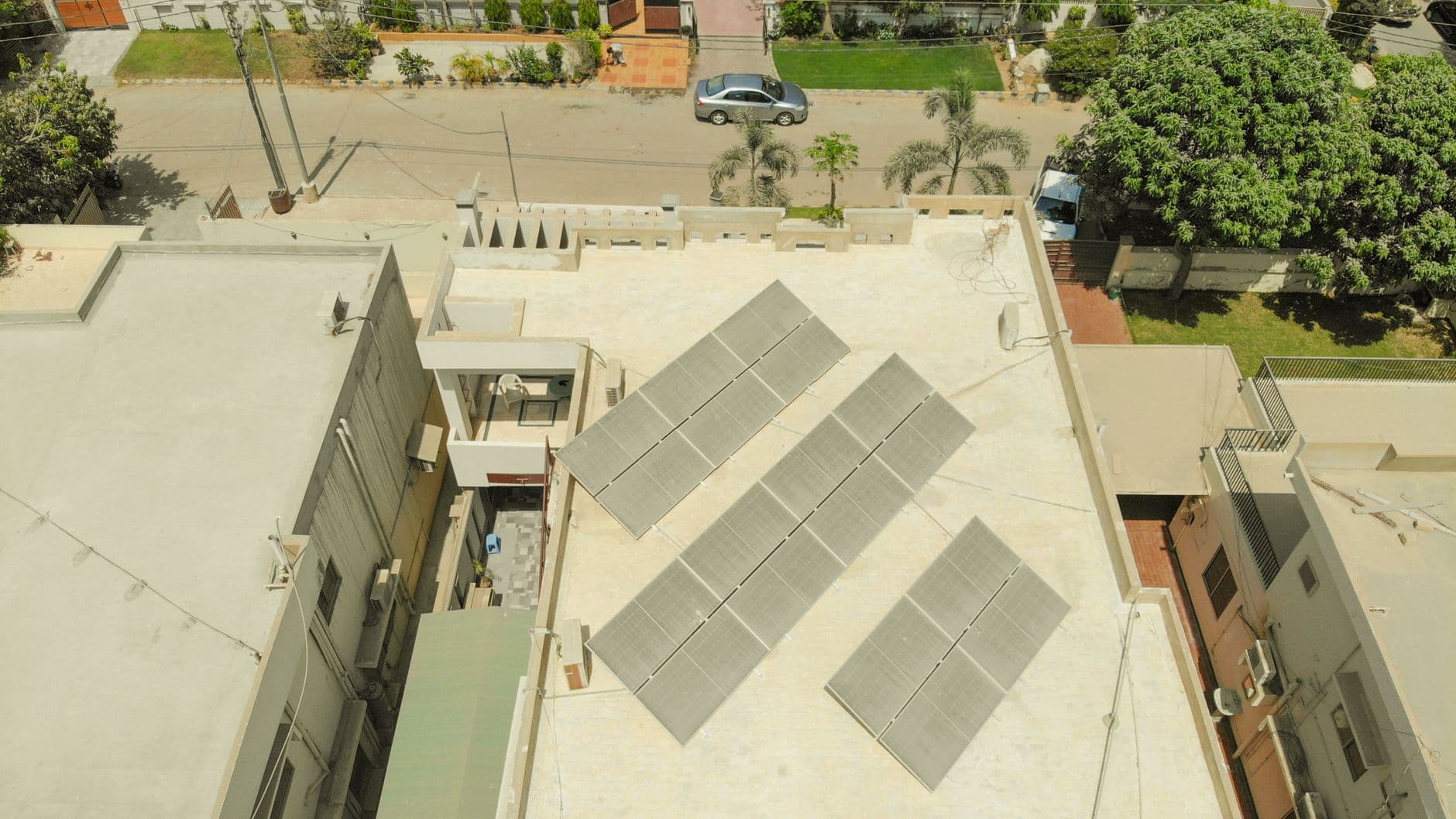
740W Pakistani Solar Panels @28 PKR/W – Cost
What are the new 740‑W, 640‑W, 585‑W and 620‑W panels?
The latest high‑power modules from manufacturers such as Jolywood and CSI Solar now deliver up to 740 W of peak power in a single‑glass, bifacial design. The 620 W Warrior series and the 640 W n‑type bifacial dual‑glass modules are built on n‑type silicon, which offers higher efficiency and better temperature coefficients than conventional p‑type cells. These panels are marketed for large‑scale rooftop and ground‑mount installations, and their dimensions (about 2 m × 1 m) fit standard mounting structures while delivering more kilowatts per square metre than older 330‑W modules.
How much do they cost in Pakistan today?
As of June 2026, Pakistani distributors list the 620‑W and larger panels at roughly 28 PKR per watt – a price that has fallen from the 30‑36 PKR range earlier in the year. At this rate a 740‑W module costs about 20,720 PKR (≈ 375 NIS), while a 620‑W panel is around 17,360 PKR (≈ 315 NIS). The price includes the dual‑glass frame and bifacial technology, making it competitive with imported European modules.
How do Pakistani prices compare with Israeli market rates?
In Israel, a typical residential solar module (≈ 330 W) sells for ≈ 1,200 NIS per kW after installation, meaning a 15 kW rooftop system costs around 18,000 NIS (including inverters, mounting and labour). By contrast, the Pakistani 28 PKR/W price translates to ≈ 504 NIS per kW (28 PKR × 0.018 NIS/PKR). A 15 kW system built with these panels would therefore cost ≈ 7,560 NIS, less than half the Israeli price.
What does this mean for Israeli installers and homeowners?
If Israeli installers import these high‑power Pakistani modules, the lower material cost could shave ≈ 10,500 NIS off a typical 15 kW residential installation. Even after accounting for shipping, customs (≈ 15 % of CIF value) and a modest 5 % local handling fee, the net cost remains under 9,200 NIS, still roughly 45 % cheaper than sourcing locally. This price gap could accelerate the rollout of larger rooftop systems, especially for commercial farms and industrial warehouses that need high‑density power.
Practical example: 15 kW home system cost breakdown
- Modules: 15 kW ÷ 0.74 kW ≈ 20.3 ≈ 21 panels @ 740 W each → 21 × 20,720 PKR ≈ 435,120 PKR → 7,830 NIS
- Shipping & insurance (5 % of module cost): ≈ 390 NIS
- Customs duty (15 % of CIF): ≈ 1,175 NIS
- Inverter (10 kW Sunny Boy 10 kW): ≈ 2,200 NIS
- Mounting & labour: ≈ 1,500 NIS
- Total: ≈ 12,095 NIS
Assuming an average Israeli feed‑in tariff of 0.5 NIS / kWh, a 15 kW system generates roughly 22,500 kWh / yr (1,500 kWh / kW · 15 kW). Annual revenue would be about 11,250 NIS, giving a pay‑back period of just 0.9 years – well under the typical 5‑7‑year horizon for Israeli rooftop solar.
How will this affect Israel’s renewable‑energy goals?
Israel aims to reach 17.1 GW of solar capacity by 2030, more than three times its 2023 installed base. Lower‑cost, high‑power modules can help meet this target by reducing upfront capital, encouraging larger installations on limited roof space, and improving the economics of commercial‑scale rooftop farms. Policy‑makers may need to revisit net‑metering rates and import duties to fully capture the benefit of cheaper foreign‑made panels.
Bottom line
Pakistani 740‑W solar panels priced at 28 PKR/W (≈ 504 NIS/kW) make a 15 kW home system cost under 9,200 NIS after import fees, delivering a pay‑back under one year at current Israeli tariffs. For Israeli installers and homeowners, importing these high‑power modules could be a game‑changer in the race to hit the country’s ambitious solar‑capacity goals.
Sources & further reading
FAQ
What is the price per watt of the new Pakistani 740 W solar panels?
They are listed at roughly 28 PKR per watt, which converts to about 504 NIS per kilowatt.
How does the cost of a 15 kW system using these panels compare to an Israeli‑built system?
A 15 kW system with Pakistani panels costs around 7,560 NIS for the modules alone, versus roughly 18,000 NIS for a comparable Israeli‑sourced system.
What is the expected pay‑back time for a 15 kW system in Israel using these panels?
At a feed‑in tariff of 0.5 NIS/kWh, the system would earn about 11,250 NIS per year, giving a pay‑back period of under one year.
Are there additional costs when importing panels from Pakistan?
Yes – shipping (≈5 % of module cost), customs duty (≈15 % of CIF value) and a small local handling fee (≈5 %) add to the total price.
Will these cheaper panels help Israel meet its 2030 solar target?
Lower upfront costs enable larger rooftop installations, supporting Israel’s goal of 17.1 GW of solar capacity by 2030.
Which manufacturers produce the 740 W and 620 W modules?
Jolywood and CSI Solar are among the leading producers of the 740 W, 640 W, 585 W and 620 W high‑power bifacial modules.
Share this post
How much could your roof earn?
Pick a roof size and region — get an instant estimate.
Estimated annual revenue
₪17,804
Payback
3.9 yrs
System size
Annual output
trees
More from Markets
4
Anlit to Launch Data Center Farms in Israel & Canada – Market Impact and Solar Opportunities
Anlit will build 100 MW data‑center farms in Israel and Canada, each offsetting 30 % of power with on‑site solar, saving roughly NIS 3 billion annually.
Global Solar Additions Hit Record 664 GW in 2025 – What It Means for Israel’s Solar Future
A record 664 GW of solar capacity was added worldwide in 2025, but growth slowed to 12% and a contraction is forecast for 2026 – the first such dip in over 20 years, with major implications for Israel’s solar market.
Otovo Buys Israel’s Green Panel for $11 Million to Accelerate EMEA Solar Services
Otovo’s $11 million acquisition of Israel’s Green Panel instantly expands its EMEA solar services, adds over 150 MW of rooftop PV and offers Israeli homeowners a roughly **5.6‑year payback** on a typical 15 kW system.
Europe’s C&I Solar & Storage Boom: Trust, Revenue‑Stacking and What It Means for Israel
Europe’s C&I solar‑storage market will grow 78 % in 2026, driven by trust, ESG performance and revenue‑stacking – a trend that could add roughly NIS 4.3 billion of storage investment to Israel’s commercial sector.